




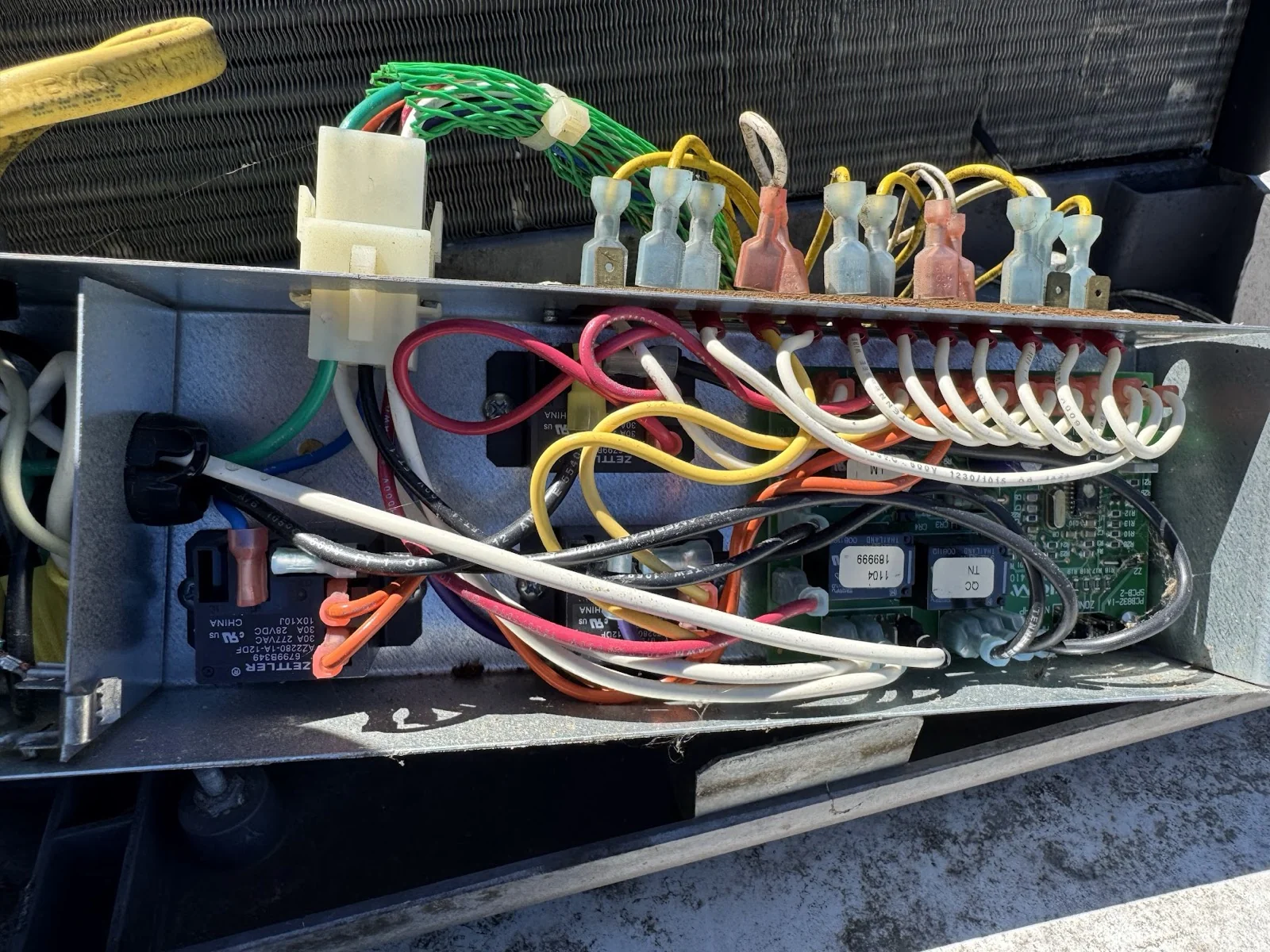
Treat clues as a reason to inspect, not a diagnosis
A parked RV offers sheltered spaces where rodents may leave nesting material, droppings, and gnaw marks. Wiring damage is one possible consequence, but a failed appliance or slide does not prove animals caused it. Start with a careful account of what you saw and what stopped working. Keep the distinction between visible evidence and an electrical diagnosis clear when you speak with a technician.
Do not energize a circuit to see whether visibly chewed wiring still works. Exposed conductors, damaged insulation, smoke, and burning odors are reasons to stop using affected equipment. Keep people and pets away from the area. If there is an active fire or immediate danger, move away and contact emergency services rather than opening compartments to investigate.
Look only in safely accessible spaces
Use a light to observe ordinary storage compartments and visible interior areas without removing electrical covers. Look for shredded insulation, disturbed stored materials, droppings, and gnawed packaging. Photograph what you can see without reaching into a concealed space. Never put a hand near a fan, linkage, battery terminal, or unknown wire bundle to check for a nest.
Avoid sweeping or vacuuming dry droppings or nesting material, which can stir contaminated dust into the air. Consult public-health guidance or a pest professional for appropriate cleanup precautions. Keep children and pets away until the area has been addressed. Do not mix cleaners, spray chemicals into electrical equipment, or assume a household cleaner is safe for every RV surface or component.
Understand why the symptoms can be confusing
Damaged wiring can interrupt a circuit, create an intermittent connection, or allow a short. Depending on the RV's design and the location of damage, symptoms might involve lights, controls, appliances, or moving equipment. Multiple unrelated-looking faults can share a power or control path. Conversely, one failed device can have a mechanical cause with no rodent involvement at all.
Write down which systems fail, whether a fuse or breaker operated, and whether the problem changes without touching anything. Do not repeatedly replace fuses or install a higher-rated one to keep a circuit running. Review 12V and 120V electrical service when you need an assessment. A technician needs to identify the affected circuit and extent of damage before deciding what repair is appropriate.
A stuck slide may be electrical or mechanical
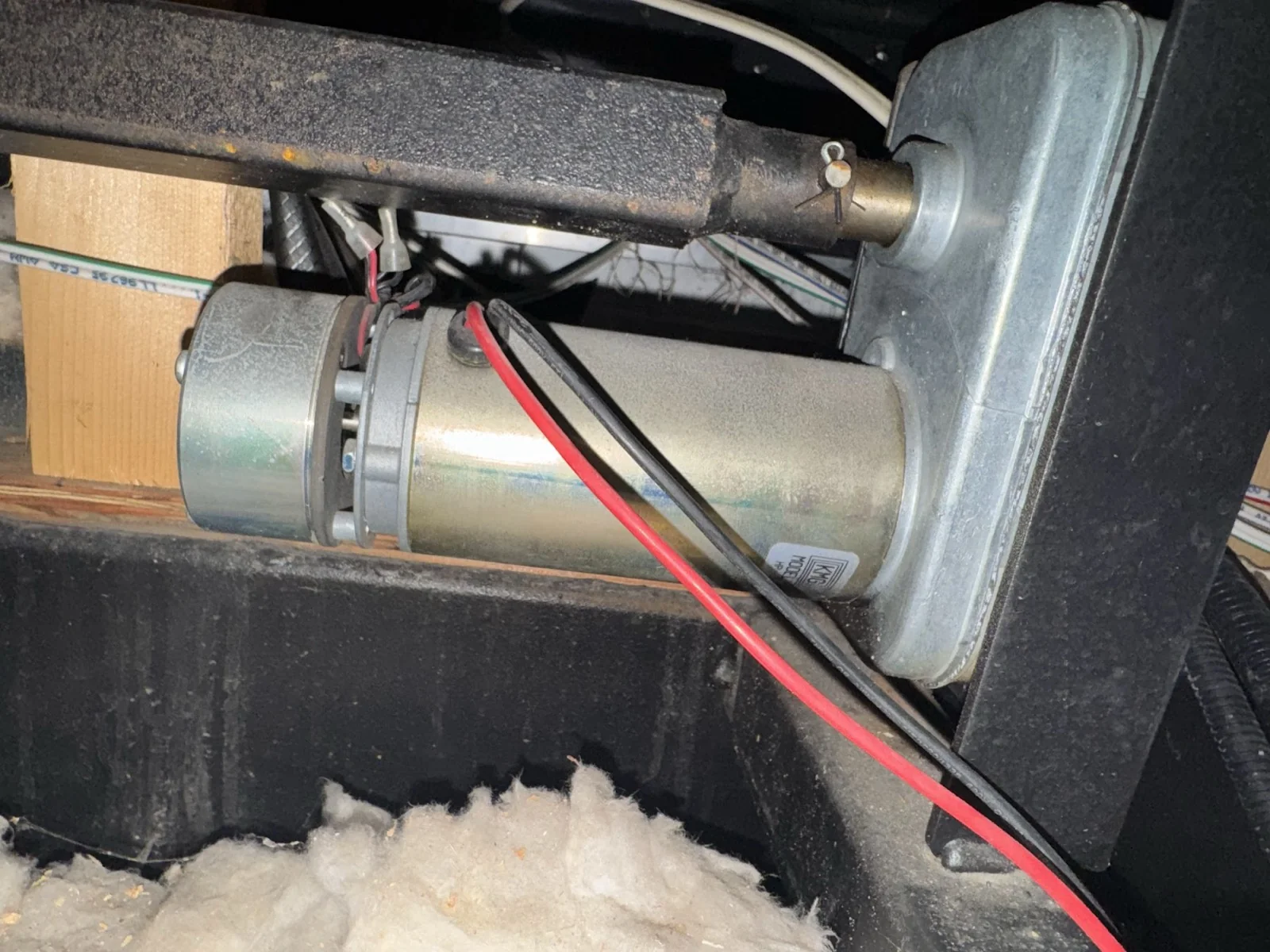
A slide motor or controller needs the correct power and operating conditions. Damage to wiring in that system could prevent movement, but low battery power, an interlock, an obstruction, or a mechanical fault can look similar from inside the RV. Do not bypass a safety device or bridge terminals to isolate the problem. Such shortcuts can cause unexpected movement and expose you to electrical hazards.
If a slide stops, keep hands away from its tracks and leave the controls alone while checking only the owner's permitted observations. Note whether one side moved, whether there was a click, and where you saw pest evidence. Share those details when discussing slide-out repair. Do not crawl under an unsupported slide or use a jack to compensate for an unknown fault.
Let repair and pest control address different problems
Removing animals does not restore damaged insulation, connectors, or wiring. Likewise, repairing a circuit does not eliminate the entry route or a hidden nest. Coordinate pest management with electrical assessment, and ask what areas must remain accessible. If components are contaminated, avoid handling them until appropriate cleanup and electrical precautions are established. Do not cover a chewed section with tape and assume the underlying conductor is sound.
Ask the technician to explain the observed damage, the proposed repair, and any limits to what can be inspected without further access. Hidden routes through walls or enclosed spaces may require additional decisions. Keep photographs and written findings with your maintenance records. Do not interpret a single working test as proof that every concealed circuit has been checked.
Make storage less inviting without creating new hazards
Remove accessible food, pet food, crumbs, and nesting materials before storage. Keep stored supplies in suitable closed containers and check the RV periodically when safe and permitted. Inspect visible openings, but use the manufacturer's guidance before sealing gaps. Required ventilation, drains, appliance combustion openings, and moving clearances must not be blocked in the name of pest prevention.
Ask a pest professional about methods appropriate around pets, children, and the RV's construction. Follow product labels and park rules; avoid scattering poison or using improvised chemicals in enclosed spaces. A trap or repeller is not a substitute for inspections and entry-point management. When returning after storage, pause before powering equipment if you find fresh activity. Preserving the scene and obtaining help can prevent a small visible clue from becoming an avoidable electrical incident.
Talk through the next step
Geos RV Repair Service is based in Cape Coral, FL. We come to your driveway, campsite, storage lot or RV park. Call (866) 321-8269 or request service to describe your RV, location, and symptoms. Ask about availability, access, and the proposed next steps before making repair or travel plans.
Common questions
Yes, damaged power or control wiring could interrupt slide operation, but it is only one possible cause. Battery condition, interlocks, obstructions, and mechanical faults can produce similar symptoms. Stop repeated attempts and have the system assessed rather than bypassing controls.