





Plan for people before protecting property
An RV is not a safe hurricane shelter. Before a storm threatens Southwest Florida, identify where everyone will go and follow evacuation instructions from local authorities. Make arrangements for pets, prescriptions, transportation, and a place to stay. Do not wait to see whether the RV feels stable in rising wind. If authorities direct evacuation, protecting the vehicle must not delay leaving.
Review your insurance documents, campground procedures, and the RV manufacturer's storm or storage guidance while conditions are calm. Keep contacts and identification available away from the RV. These preparations reduce last-minute decisions, but no checklist can make a parked motorhome or trailer hurricane-proof. Treat moving, storing, and returning to the RV as separate decisions, each dependent on safe conditions and official instructions.
Choose an early, realistic parking plan
If relocation is part of your plan, confirm that the destination is available and the RV is fit to travel before the weather deteriorates. Consider the route, fuel needs, driver readiness, and campground access. Do not attempt to outrun dangerous weather or tow through floodwater. A reservation or a familiar route is not a guarantee that roads will remain open.
If the RV will stay parked, follow the site operator's instructions and the manufacturer's guidance for securing it. Do not improvise tie-downs, anchor points, or support arrangements. Trees, low areas, and nearby unsecured objects can introduce hazards that leveling equipment cannot solve. Ask qualified personnel about any unfamiliar securing system well before storm conditions make outdoor work unsafe.
Reduce exposed equipment while it is still safe
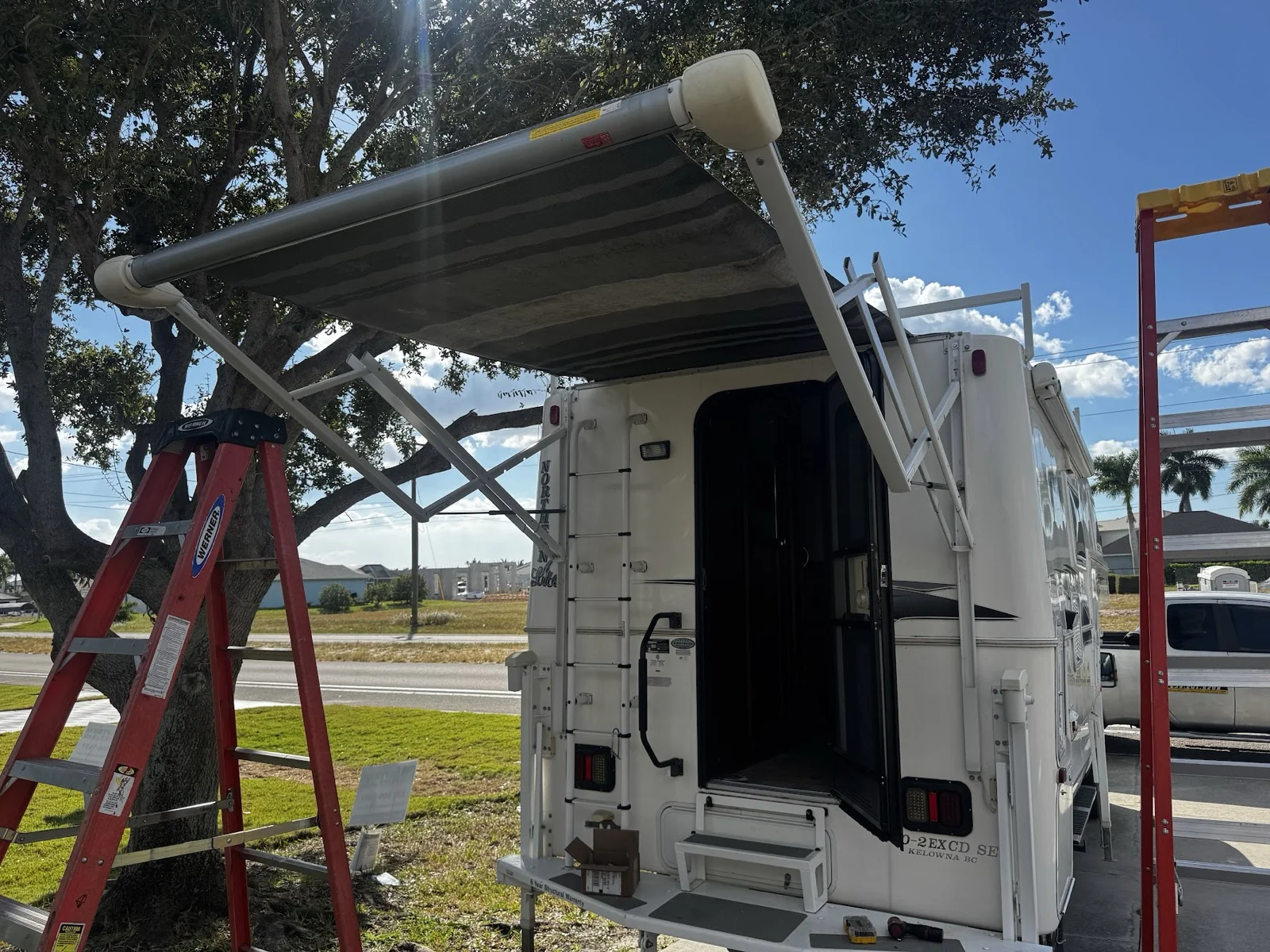
Follow manufacturer instructions to stow the awning, secure loose outdoor belongings, and close exterior compartments. Retract slide-outs when the operating instructions and conditions allow, checking for obstructions first. Do this early rather than handling moving equipment in high wind. Never stand beneath an unstable awning or force a slide that is already binding just to finish storm preparation.
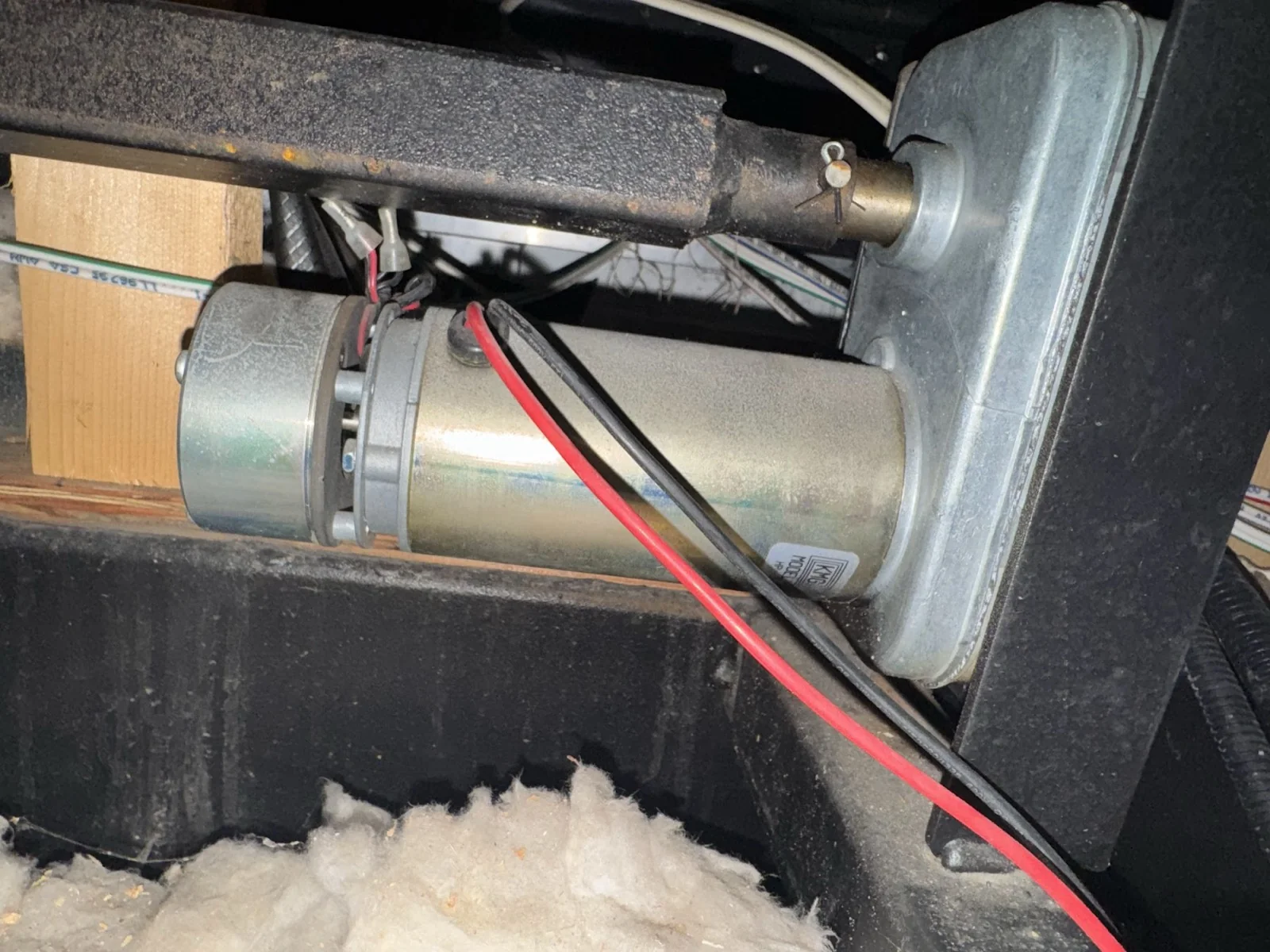
If a slide will not operate normally, stop and explain the symptom when requesting slide-out and hydraulic repair. A repair conversation is not a substitute for an evacuation plan. Avoid climbing onto the roof to add a tarp as weather approaches. Loose covers and improvised attachments may become hazards, and rooftop work introduces fall risks even before rain begins.
Document condition and shut down deliberately
Take ground-level photographs of exterior panels, windows, roof edges, and visible existing damage before the storm. Save copies where you can access them without entering the RV. Bring important documents, medications, and valuables with you. Record the location of keys, disconnects, and shutoffs, but do not share sensitive information in public posts about where the RV is stored.
Use the manufacturer's shutdown instructions for electrical, water, and fuel systems. Ask the site operator about utility procedures rather than opening a pedestal or altering park equipment yourself. Do not disconnect or handle electrical equipment while standing in water. Once conditions are hazardous, stop preparation and leave. A missed task is not a reason to remain in an evacuation area or return during the storm.
Return only when authorities and conditions allow
After the storm, wait for permission to return and consider hazards around the RV before approaching. Downed lines, standing water, unstable trees, debris, and damaged utility equipment require distance and appropriate help. Floodwater can conceal energized equipment and ground hazards. Do not enter water to reach a cord, inspect the underside, or retrieve belongings.
Do not reconnect shore power or start equipment merely because the exterior looks intact. If water reached electrical components, or you cannot establish what was exposed, obtain a qualified assessment. The RV electrical service page is a useful place to start a conversation about RV-side concerns; the park or utility must address its own damaged supply equipment. Never use a generator indoors or where exhaust can enter occupied spaces.
Inspect gently and preserve what you find
From safe ground, look for shifted trim, missing covers, torn seals, impact marks, and displaced panels. Inside, if entry is safe, check for fresh stains, damp cabinets, soft flooring, and doors that no longer fit normally. Photograph damage before cleaning or moving items, while still prioritizing immediate personal safety. Ask your insurer what documentation and authorization it requires before nonemergency repair.
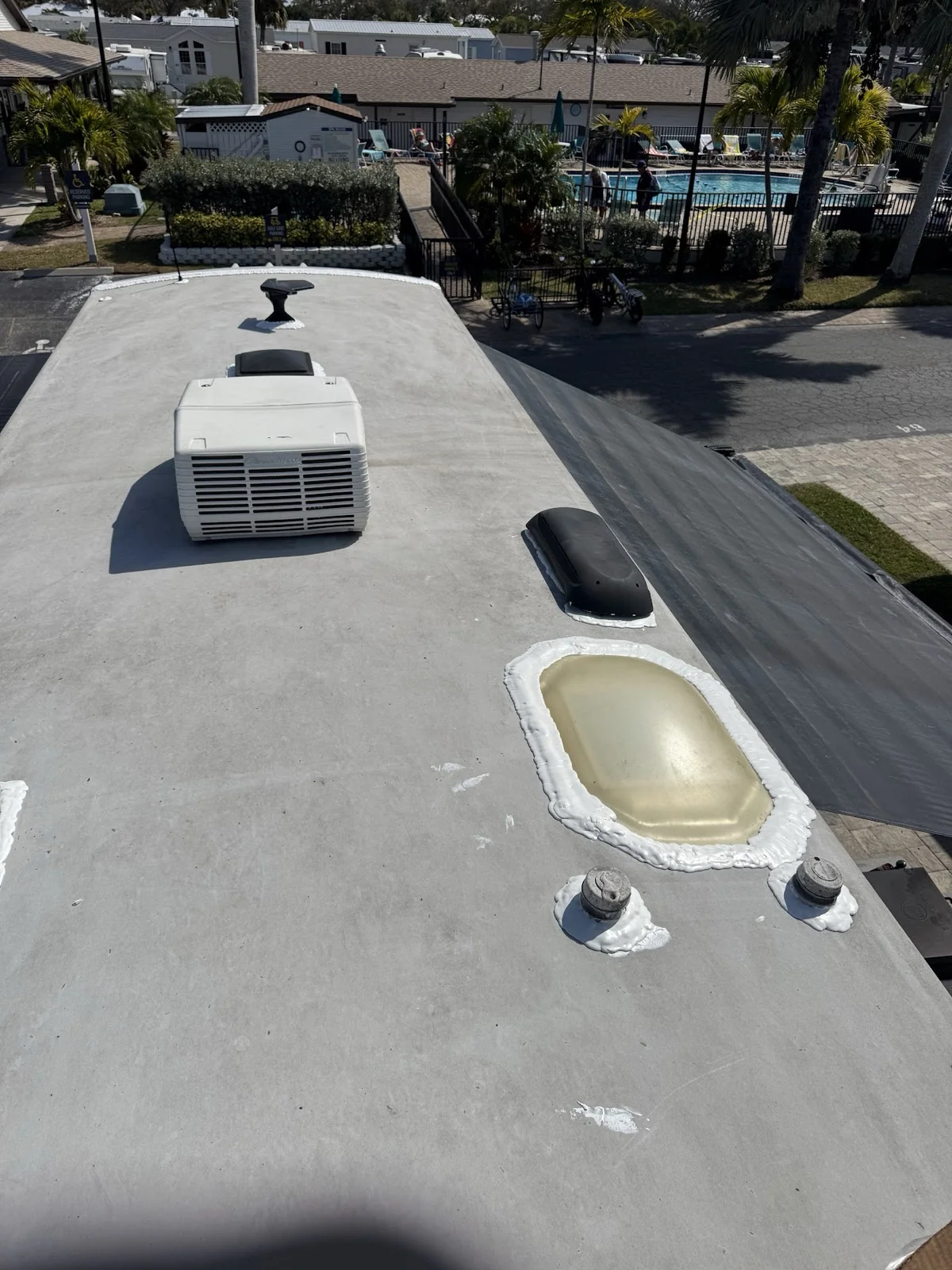
Wind-driven rain may enter at seams and openings without leaving a dramatic exterior hole. Discuss suspected intrusion through roof and leak repair, and describe both visible damage and interior symptoms. Do not cover evidence with sealant before the cause is assessed. Temporary protection should not involve climbing on a damaged roof, handling unsafe wiring, or entering a structurally questionable RV.
Talk through the next step
Geos RV Repair Service is based in Cape Coral, FL. We come to your driveway, campsite, storage lot or RV park. Call (866) 321-8269 or request service to describe your RV, location, and symptoms. Ask about availability, access, and the proposed next steps before making repair or travel plans.
Common questions
Usually the manufacturer's storm preparation calls for stowing exposed equipment, but follow the instructions for your particular RV and awning. Complete the task before dangerous weather. Do not force a malfunctioning slide or work beneath unstable equipment; evacuation and personal safety come first.