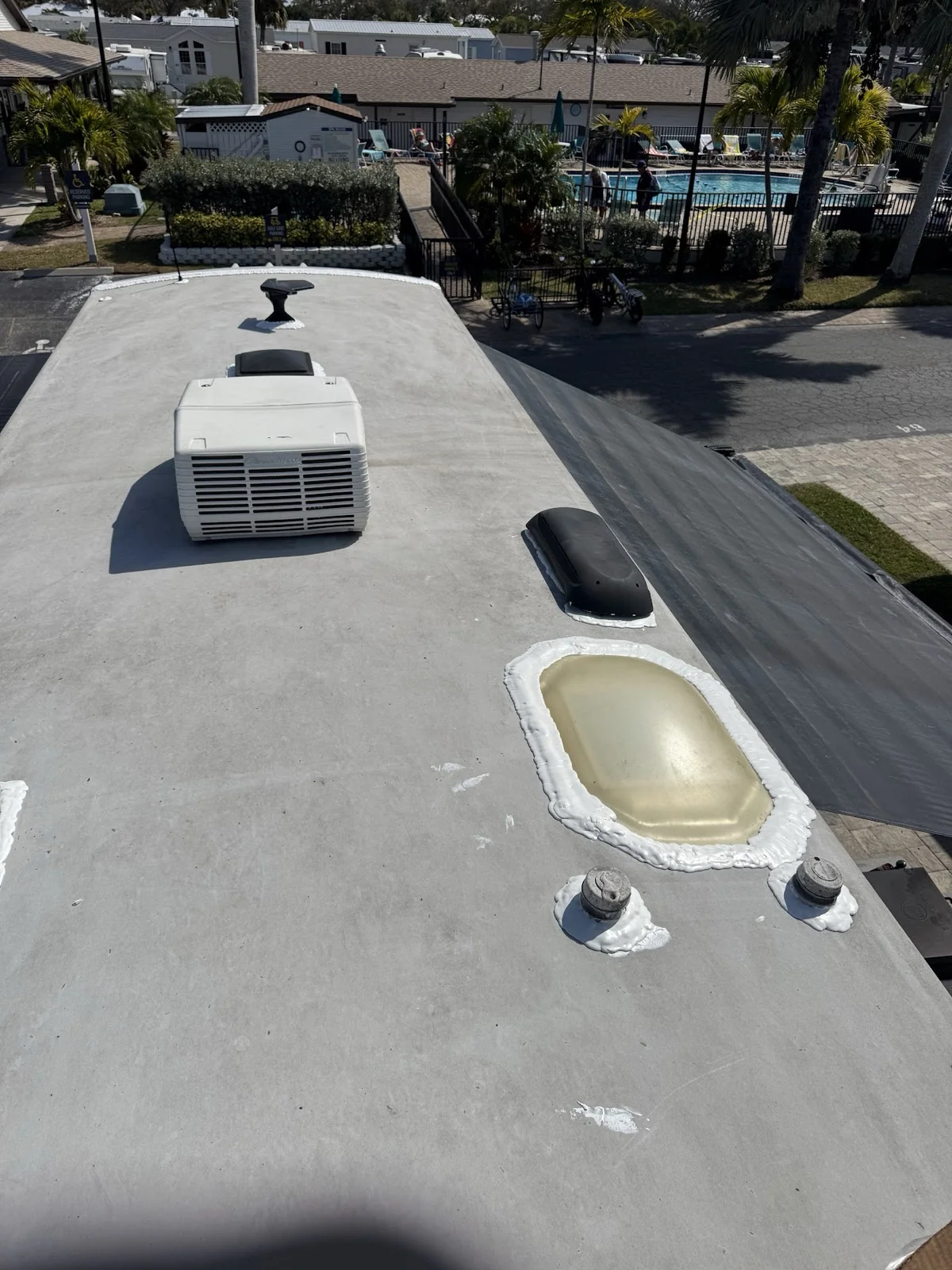






Start with comfort and a clear symptom
An RV that feels sticky in Southwest Florida does not automatically have a failed air conditioner. Sun exposure, humid outdoor air, restricted airflow, and electrical trouble can produce similar complaints. Start by describing what you actually notice: weak air at the registers, air that feels warm, frequent cycling, dripping inside, or a unit that never starts. A useful description helps separate a comfort problem from a condition that needs prompt attention.
Protect people and pets before troubleshooting. If the interior is becoming unsafe, move to an air-conditioned location rather than waiting for the RV to recover. Stop using equipment that produces smoke, sparks, or a burning smell. Do not open electrical compartments or climb onto a wet roof to investigate cooling performance.
Check settings before touching equipment
Read the thermostat display and confirm the selected mode, temperature setting, and fan setting against the owner's manual. Some systems have separate controls or zones, so verify that the setting applies to the area that feels uncomfortable. Replace thermostat batteries only if your model uses owner-replaceable batteries and the manual describes the procedure. Avoid repeated resets; they can erase a useful symptom without fixing its cause.
Keep a short record of when cooling starts, whether the fan continues running, and what changes during the afternoon. Note whether other electrical equipment stopped at the same time. These observations are safer and more useful than guessing which component to replace. Never bypass a thermostat, safety switch, or breaker to force the system to operate.
Give the air a clear path
Inspect accessible return-air grilles and the owner-serviceable filter with the equipment switched off as directed by its manual. Follow the manufacturer's cleaning or replacement instructions, including any requirement that a washed filter dry completely. Keep bedding, bags, and furniture away from returns and supply registers. Check whether adjustable vents were inadvertently closed, but do not remove ductwork or reach into a running fan.
A visibly dirty filter is worth addressing, but it does not prove that every cooling problem is solved. If airflow remains weak after normal owner maintenance, arrange an assessment through the RV A/C service page. Leave rooftop covers, refrigerant components, and internal electrical connections to a qualified technician. They are not appropriate places for trial-and-error owner checks.
Reduce the heat and moisture entering the RV
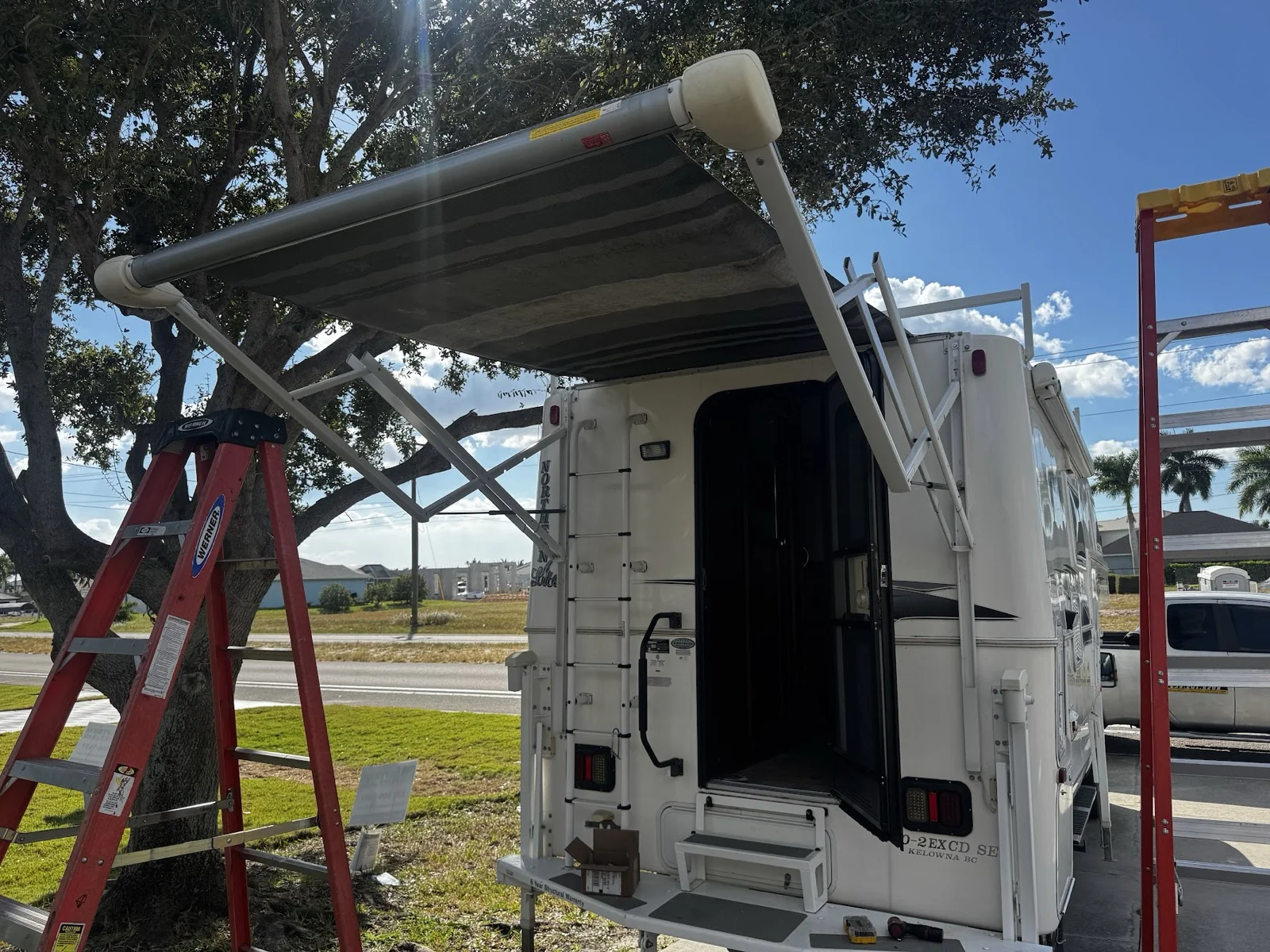
Use window shades and limit unnecessary door openings during the hottest part of the day. If campsite rules and safe positioning allow, choose shade without parking under damaged branches or blocking required clearances. Do not cover an air conditioner or obstruct its outdoor airflow. An awning is not a substitute for storm awareness; follow its operating limits and retract it when conditions require.
Cooking, showering, and bringing wet gear indoors add moisture. Use ventilation as the RV manufacturer recommends, then close openings that should remain closed during air conditioning. Running the A/C while leaving windows open invites additional humid air inside. These habits can improve conditions without proving the equipment is healthy, so continue watching for a change in airflow, unusual sounds, or water where it does not belong.
Treat ice, water, and power trouble differently
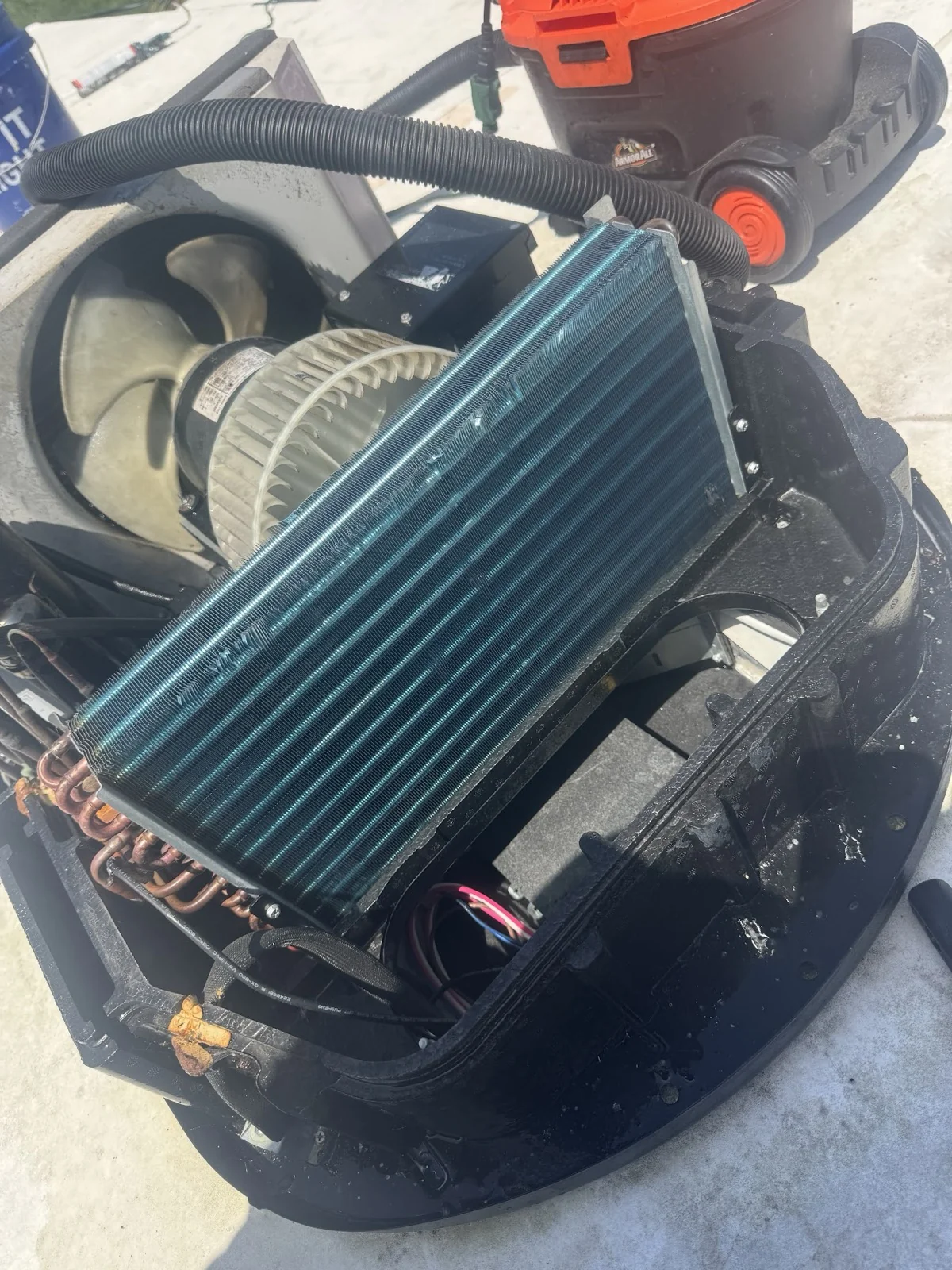
Visible ice or a sudden loss of airflow is a reason to stop cooling operation and consult the equipment instructions. Do not chip ice away or apply heat to speed the process. Protect nearby belongings from water without opening the unit. Repeated icing needs diagnosis because airflow, controls, and other equipment faults can overlap. A nighttime freeze-up is not automatically evidence that the refrigerant needs attention.
If a breaker trips, do not repeatedly reset it. A hot plug, discolored connector, buzzing pedestal, or damaged cord also calls for stopping use and getting help. Do not handle a suspect connection. Read about RV electrical service when cooling problems appear alongside power symptoms. Never remove a pedestal cover or test exposed energized terminals yourself.
Prepare useful information for a service conversation
From a safe location, collect the RV make and model, the air conditioner model if its label is readily accessible, and a description of the thermostat. Record whether the problem affects one unit or every unit. Describe the shore-power arrangement without dismantling anything, and mention any recent power interruption, storm, storage period, or maintenance. Photographs of accessible controls and visible water stains can help explain the complaint.
Avoid promising yourself that a particular part is the answer because another owner had similar symptoms. Different systems can look alike while requiring different checks. Ask what information is needed before a visit, whether access restrictions at your campsite matter, and how the diagnosis and repair decision will be discussed. Do not authorize replacement equipment solely from an online symptom list.
Talk through the next step
Geos RV Repair Service is based in Cape Coral, FL. We come to your driveway, campsite, storage lot or RV park. Call (866) 321-8269 or request service to describe your RV, location, and symptoms. Ask about availability, access, and the proposed next steps before making repair or travel plans.
Common questions
Follow your A/C manufacturer's operating guidance and campground power requirements. During hot weather, steady operation may be appropriate for some systems, but continuous running does not prove cooling is adequate. Keep airflow clear, monitor comfort, and stop for icing, electrical warning signs, or unusual water leakage.